Lightweight Paper Box, Packaging Cost Reduction, Paper Box Structure Design, Sustainable Packaging, Shenzhen Xinpeng Packaging
In an era of rising material and logistics costs, e-commerce brands and manufacturers are seeking breakthroughs to reduce expenses and improve efficiency. For businesses reliant on paper box packaging, "reducing weight" is often seen as the most straightforward path. However, simply "using less material" inevitably compromises strength, leading to transport damage and ultimately, greater losses.
At Shenzhen Xinpeng Packaging & Printing Co., Ltd., we propose a smarter approach: True lightweighting is about optimization, not sacrifice. It is a systematic engineering process that leverages scientific design, material innovation, and advanced manufacturing to maintain—or even enhance—protective performance while achieving material savings, weight reduction, and lower costs. By following the strategies below, achieving a 15% cost reduction is an attainable and realistic goal.
The Core Philosophy: Shifting from "Over-Engineering" to "Precision Engineering"
Traditional packaging design tends to use thicker, heavier paperboard to "guarantee" safety, which is an inefficient use of resources. The core of lightweight design is "Precision Protection":
Place material where it matters most, rather than uniformly across the entire package.
Use structure to create strength, rather than relying solely on material thickness.
Achieve a perfect match between the package and the product's protection needs, avoiding over-packaging.
Four Core Strategies for Lightweighting and Cost Reduction
Strategy 1: Structural Mechanics Optimization – Engineering Strength with Design
Intelligent structural design can use less material to achieve higher stacking strength and impact resistance.
Reinforcement Ribs & Unique Structures: Designing corrugated or honeycomb-shaped ribs on the sidewalls or base of a box significantly enhances its rigidity, preventing deformation under pressure.
Scientifically Designed Internal Partitions: Using die-cut paper partitions instead of fully-wrapped foam. These partitions precisely secure the product and themselves act as supportive structures, sharing external pressure.
Optimized Lock-bottom Design: A precision-engineered automatic lock-bottom base can bear far more weight than a simple flap-style design, allowing for the use of lower grammage paperboard.
A Xinpeng Case Study: We optimized the packaging for a smart speaker brand. By adding key support ribs to the inner walls and implementing an integrated paper tray, we successfully reduced the outer box paper grade from 400g to 350g. While passing all drop tests, the cost per box decreased by approximately 12%.
Strategy 2: Material Science Application – Choosing Smart, Not Just Expensive
Different paper combinations and properties offer different strength-to-weight ratios.
Adopt High-Strength, Low-Basis-Weight Paperboard: Modern papermaking produces high-performance corrugated board that offers higher ring crush and burst strength at the same grammage. Switching to these specialty boards is a key step in lightweighting.
The Application of "Micro-flute": Micro-flute boards (E-flute, F-flute, N-flute) are characterized by high flatness, excellent printability, and structural robustness. For electronics, cosmetics, and premium gifts, micro-flute is an ideal substitute for heavy cardstock—it's lighter and offers better cushioning.
Composite Materials & Local Reinforcement: Laminating reinforcing material only to key stress points (like corners) or using local coating to enhance abrasion resistance embodies the principle of "using the best steel for the blade."
Strategy 3: Production Process Upgrade – Precision Control & Waste Reduction
Advanced equipment and intelligent production are the guarantees of precision lightweighting.
Digital Die-Making & Precision Die-Cutting: Xinpeng uses computer-controlled laser-produced die-cutting plates for extreme accuracy, enabling complex structures and minimizing paper waste during the cutting process.
Optimized Layout & Ganging: Using intelligent software to optimize sheet layout improves material utilization. Every 1% reduction in waste directly translates to profit.
Water-based Inks & Eco-friendly Finishes: Using lighter water-based varnishes instead of lamination, or opting for varnishing where requirements allow, reduces overall weight and is more environmentally friendly.
Strategy 4: Total Packaging System Evaluation – Looking Beyond the Box
Lightweighting requires a holistic view of the entire packaging system.
Right-Size Packaging: Use data analysis to equip your product line with multiple box sizes, eliminating "small products in large boxes." A well-fitted package significantly reduces the need for internal void fill.
Lightweight Cushioning Materials: Replace heavy foam or EPE with air pillows, paper filler, or cornstarch packaging peanuts. These materials offer excellent cushioning with minimal weight.
Transport & Warehouse Optimization: Lighter, flatter designs mean more products can be loaded per pallet and container, reducing the unit cost of transportation and required storage space—a significant, though often hidden, cost saving.
The Xinpeng Packaging Lightweight Design Process
How we help you achieve your goals:
Needs Diagnosis & Analysis: We understand your product characteristics, logistics environment, and cost targets.
Lab Simulation & Testing: Before production, we use drop testers and compression testers to validate the reliability of the new design.
Prototyping & Evaluation: We provide physical samples for evaluation and load-testing.
Mass Production & Continuous Optimization: We ensure stable production and iterate based on feedback.
Conclusion: Lightweighting – The Path to Sustainability & Higher Profits
Paper box lightweighting is a comprehensive solution that integrates material science, structural mechanics, and production technology. The benefits extend beyond direct reductions in material and shipping costs to include an enhanced brand image through sustainability, aligning with global trends.
Shenzhen Xinpeng Packaging & Printing Co., Ltd., with its forward-thinking design理念 and mature production technology, has successfully helped numerous brands achieve lightweight packaging upgrades. We are confident that through scientific methods, reducing costs by 15% while guaranteeing strength and safety is a conservative and measurable target.
Contact a Xinpeng Packaging Engineer today for a complimentary lightweight packaging assessment of your products!

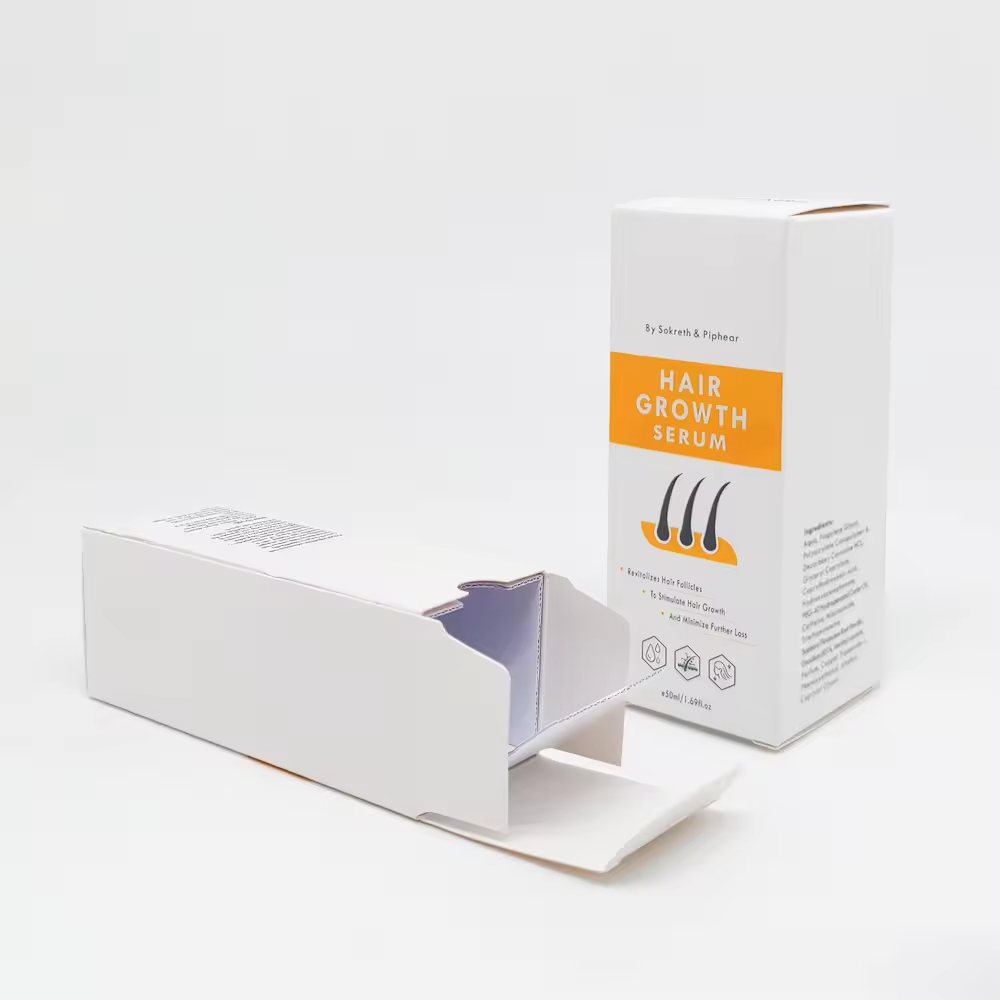 Folding Cartons
 Custom Holographic Box
 Custom Holographic Box